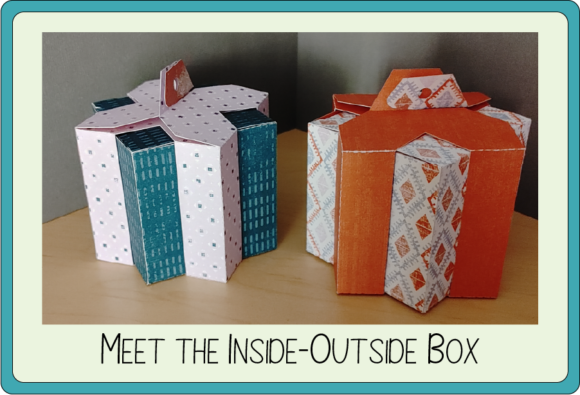
Inside-Outside Box
In the realm of paper crafting and digital design, few items generate as much immediate visual impact relative to their complexity as the Inside-Outside Box. Often referred to interchangeably with "Meet the Inside-Outside Box" in various maker communities, this specific geometric puzzle is a staple for enthusiasts who appreciate both structural ingenuity and aesthetic presentation. It is not merely a container; it is an interactive experience that transforms a standard gift-giving ritual into a moment of surprise and delight. For professionals in the creative industry, educators teaching geometry or engineering concepts, or serious hobbyists looking to elevate their portfolio projects, understanding the mechanics and application of this box offers significant practical value.
The core appeal of the Inside-Outside Box lies in its deceptive simplicity. Visually, it appears to be a single, solid cube. However, upon manipulation, the structure reveals itself to be two distinct components nested within one another. The outer shell slides away to reveal an inner compartment, creating a dual-layered storage solution. This mechanism provides a unique "wow" factor that static boxes cannot replicate. Whether used for jewelry, small electronics, sentimental keepsakes, or business cards, the act of opening the box becomes part of the value proposition. It signals effort, creativity, and attention to detail—qualities that resonate deeply with recipients across all age groups, particularly adults aged 20 to 50 who value thoughtful gifting and innovative design.
Structural Characteristics and Dimensions
When evaluating any physical product derived from digital files, precision is paramount. The Inside-Outside Box described here features precise dimensions: 2.5 x 2.5 x 2.5 inches. This cubic format is strategically chosen. It is large enough to hold meaningful items such as rings, necklaces, USB drives, or folded notes, yet compact enough to fit comfortably in a hand or a small gift bag. The symmetry of the cube ensures balance and stability, which are critical when the sliding mechanism is engaged. If the proportions were off, the friction required to slide the inner box out would either be too tight, risking damage to the material, or too loose, causing the structure to collapse during handling.
The construction relies on interlocking tabs and slots that require no adhesive if cut with sufficient accuracy. This dry-fit assembly method is a hallmark of high-quality vector designs. It allows crafters to test the fit before committing to permanent materials like cardstock, wood, or acrylic. For those using materials like thin plywood or laser-cut acrylic, the lack of glue requirements means the final product can sometimes be disassembled for repair or reconfiguration, adding to its longevity. The clean lines and sharp angles typical of this design also make it suitable for modern, minimalist decor styles, bridging the gap between functional object and decorative piece.
Digital Assets and Technical Compatibility
For the modern creator, the transition from digital file to physical object depends heavily on software compatibility. The Inside-Outside Box files are provided in a comprehensive suite of formats: JPEG, PNG, SVG, and PDF. This multi-format approach ensures accessibility regardless of the user’s preferred cutting software ecosystem. The inclusion of SVG (Scalable Vector Graphics) is particularly valuable for users of Silhouette Design Space, Cricut Design Space, or Adobe Illustrator, as these formats preserve the mathematical precision of the paths, ensuring clean cuts without jagged edges.
The specification that the file was tested in Silhouette Design Space provides a layer of assurance for users operating within that specific platform. It implies that the registration marks, cut lines, and layer structures have been validated against known quirks of the software. However, because the files also include PDF and vector options, they remain flexible for other workflows. A professional designer might prefer the SVG for editing and scaling, while a casual crafter might opt for the PDF for direct printing and manual scoring. The availability of raster images (JPEG/PNG) serves as a useful reference guide, allowing users to visualize the finished product before beginning the cutting process.
Usability and User Experience
The primary strength of the Inside-Outside Box is its intuitive usability. There is no complex assembly logic or confusing orientation steps. The design guides the user through a logical sequence: cut, score, fold, and insert. The "slide" mechanism is the defining feature, and when executed correctly, it operates with satisfying smoothness. This ease of use lowers the barrier to entry for beginners while still offering enough technical nuance to keep experienced makers engaged. The challenge lies not in understanding *how* to build it, but in mastering the material choice and cutting precision to ensure optimal performance.
Furthermore, the box encourages customization. Because the base structure is neutral, the creator can dictate the aesthetic entirely through material selection and surface treatment. Kraft paper yields a rustic, eco-friendly vibe, whereas metallic foil stock creates a luxurious, high-end feel. This flexibility makes the Inside-Outside Box a versatile tool for branding. Small business owners can use it to package premium products, enhancing perceived value without increasing packaging costs significantly. Educators can use it to demonstrate principles of spatial reasoning and mechanical advantage in a tangible way.
Practical Applications and Target Audience
Who benefits most from this resource? The answer spans several demographics:
- Hobbyist Crafters: Those looking to add variety to their gift-making repertoire will find this project rewarding. It breaks the monotony of traditional wrapping and offers a reusable or repurposable container.
- Small Business Owners: Entrepreneurs selling handmade goods can differentiate their brand with memorable unboxing experiences. The inside-outside mechanic adds an element of playfulness that customers often share on social media, providing organic marketing.
- Educators and Parents: For STEM education, this box serves as an excellent model for discussing geometry, tolerance, and friction. It is a hands-on lesson in engineering that results in a functional object.
- Digital Designers: Those testing new cutting files or exploring vector-to-physical workflows can use this project as a benchmark for precision and file integrity.
Limitations and Considerations
While the Inside-Outside Box is highly effective, it is not without limitations. The 2.5-inch dimension restricts the size of items that can be stored. It is unsuitable for larger gifts or bulky objects. Additionally, the structural integrity relies heavily on the rigidity of the chosen material. Very thin papers may sag or warp over time, especially if exposed to humidity. Conversely, thick materials like chipboard may be difficult to score cleanly without specialized tools, potentially leading to cracking along the fold lines.
Another consideration is the learning curve associated with different cutting machines. While the files are tested, variations in blade sharpness, mat tackiness, and machine calibration can affect the final fit. Users may need to perform minor adjustments, such as trimming tabs slightly or adjusting score depth, to achieve the perfect sliding action. This trial-and-error process is part of the crafting journey but requires patience and attention to detail.
Long-Term Value and Conclusion
The true value of the Inside-Outside Box extends beyond its initial creation. It represents a skill set that can be applied to countless other geometric puzzles and storage solutions. By mastering the nuances of tab-and-slot construction, creators unlock the ability to design more complex structures in the future. The included step-by-step PDF tutorial further enhances this long-term value by serving as a reference guide, reinforcing best practices in scoring, folding, and assembly.
For those seeking to enhance their creative output with projects that blend functionality, aesthetics, and interactive engagement, the Inside-Outside Box is a compelling choice. Its precise dimensions, robust digital file support, and universal appeal make it a reliable addition to any crafter’s library. Whether you are preparing a heartfelt gift for a loved one, showcasing your craftsmanship to potential clients, or simply exploring the possibilities of paper engineering, this project delivers consistent results. As the crafting landscape continues to evolve towards personalized and experiential content, resources like the Inside-Outside Box provide the foundational tools necessary to meet those demands effectively. Happy crafting, and stay tuned for upcoming innovations in this space.