Mouse Ears Bow SVG Template: A Practical Guide to Workflow Integration and Production
In the landscape of digital crafting and small business production, efficiency is not just a metric; it is the foundation of scalability. The Mouse Ears Bow SVG Template represents more than a simple graphic asset; it is a versatile component designed to streamline the creation process for creators who value consistency, speed, and cross-platform compatibility. Whether you are producing inventory for an Etsy shop, designing custom merchandise for a corporate event, or executing a personal hobby project, understanding how this template fits into your broader workflow is essential for maximizing output quality.
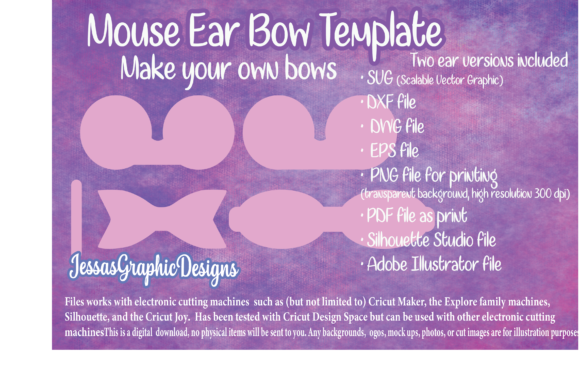
This digital asset is engineered to bridge the gap between design intent and physical execution. By providing multiple file formats and two distinct mouse ear variations, the template allows users to select the precise tool required for their specific material constraints and aesthetic goals. This guide explores how to integrate the Mouse Ears Bow SVG Template into practical workflows, from initial preparation to final quality control.
Understanding the Asset and Its Versatility
The core value of the Mouse Ears Bow SVG Template lies in its adaptability. It is not limited to a single medium or technique. While often associated with fabric-based accessories, the geometry of the bow makes it equally effective for rigid materials like faux leather, paper, or even plastic substrates. This versatility requires a strategic approach to material selection and cutting parameters.
For professionals creating hair accessories, the ability to switch between faux leather for durability and structure, and paper or cardstock for lightweight decorative elements, is crucial. The template’s clean lines ensure that whether you are cutting delicate tissue paper or thick, layered faux leather, the resulting shape remains consistent. Furthermore, the inclusion of two different mouse ear versions provides creative flexibility. One version might offer a sharper, more defined silhouette suitable for structured bows, while the other may provide a softer curve ideal for plush or fabric applications. Choosing the correct variation is the first step in ensuring the final product aligns with your design specifications.
File Format Compatibility and Software Integration
A significant bottleneck in digital crafting workflows is software incompatibility. Designers often lose time converting files or struggling with proprietary formats that do not translate well to cutting machines. The Mouse Ears Bow SVG Template addresses this by including a comprehensive suite of file types within a single ZIP archive. This multi-format approach ensures that regardless of your preferred ecosystem, you can execute the design without friction.
The included files are categorized by their primary function:
- SVG (Scalable Vector Graphic): The industry standard for electronic cutters. This format retains vector data, allowing for infinite scaling without loss of resolution. It is the primary file type for Cricut Design Space and Silhouette Studio.
- DXF and DWG: Essential for users working with CAD software or those who need to import designs into engineering-focused environments. These formats preserve geometric precision.
- EPS: A robust vector format compatible with Adobe Illustrator, InDesign, and other professional design suites. This is ideal for designers who need to manipulate the bow further before sending it to a cutter.
- PNG (300 DPI, Transparent Background): High-resolution raster images useful for printing directly onto substrates or for use in software that does not support vector editing.
- PDF: Useful for visualizing the design at actual size before cutting or for sharing the design with clients or collaborators who may not have cutting software installed.
- Adobe Illustrator & Studio File: Native editable files that allow for deep customization. The inclusion of Silhouette Studio files is particularly valuable, as it enables users to operate the design without upgrading to higher-tier licensing levels of Silhouette software.
When importing these files, always verify the scale. Vector files are resolution-independent, but cutting machines require accurate dimensional input. Most modern software will default to inches or millimeters, but confirming the settings before cutting prevents costly material waste.
Preparation and Material Considerations
Before engaging the cutting machine, proper preparation is critical. The success of a project using the Mouse Ears Bow SVG Template depends heavily on how the material interacts with the blade and the mat. For faux leather projects, which are increasingly popular due to their vegan-friendly nature and durability, attention to blade sharpness and pressure settings is paramount.
Faux leather can be thicker and more resistant than vinyl or cardstock. If using the SVG file for a faux leather bow, consider layering. The template’s structure allows for easy stacking of multiple layers to create depth. However, each layer must be cut individually or aligned precisely if using a single-pass cut with a deeper blade setting. Always perform a test cut on a scrap piece of your chosen material. Adjust the force and speed settings based on the thickness of the faux leather or plastic sheet you are using.
For paper-based applications, such as scrapbooking or gift embellishments, the high-resolution PNG provided can be used for printing rather than cutting. This expands the utility of the template beyond physical fabrication into graphic design workflows. The transparent background of the PNG ensures that when printed, the bow integrates seamlessly over other design elements without unwanted white borders.
Workflow Integration and Production Efficiency
Integrating the Mouse Ears Bow SVG Template into a production line requires organization. For entrepreneurs and small business owners, batching similar tasks improves efficiency. If you are producing a collection of hair bows, organize your digital files by material type and color. Load all necessary SVG files into your cutting software’s workspace before attaching the material to the cutting mat. This reduces downtime between cuts.
The dual-variation feature of the template should be leveraged strategically. If you are creating a mixed bundle of products, assign one ear style to a specific product line and the other to a different line. This creates a recognizable brand signature across your offerings. For example, use the sharper ear version for formal occasion bows and the softer version for everyday casual wear. This differentiation adds perceived value and variety without requiring additional design work.
Quality control is another area where this template excels. Because the files are vector-based, the edges are mathematically precise. There are no jagged pixels or inconsistent curves. When inspecting finished products, look for clean cuts with no fraying (in fabric) or tearing (in paper). If issues arise, they are likely due to machine calibration or dull blades, not the file itself. Regularly check your cutting mats for adhesive buildup, which can affect the stability of the material during the cutting process.
Expanding Use Cases Beyond Hair Accessories
While hair bows are the most common application, the Mouse Ears Bow SVG Template has broad applicability. Its geometric simplicity allows it to function as a decorative element in various contexts. For instance, the bow can be applied to 3D printer models as a textured surface detail, provided the supporting software accepts SVG imports. It can also be used for sublimation printing on mugs, shirts, or pillows. In these cases, the PNG or PDF files serve as the transfer image.
Marketers and educators can utilize the template for creating branded swag or classroom decorations. The ability to quickly generate consistent logos or icons saves time and ensures brand coherence. Freelancers offering design services can offer clients customizable options by allowing them to choose between the two ear styles, adding a personalized touch to the service.
Long-Term Usability and Maintenance
Digital assets are long-term investments. To ensure the Mouse Ears Bow SVG Template remains usable, maintain a structured digital library. Store the downloaded ZIP file in a dedicated folder labeled with the date of purchase and the content description. Extract the files immediately upon download to avoid corruption or accidental deletion of the compressed archive. Keep backups on external drives or cloud storage.
As cutting technology evolves, new software features may emerge. Revisit the template periodically to see if updated versions are available or if new techniques, such as heat transfer vinyl (HTV) layering, can enhance your current projects. The foundational vectors provided in the SVG and EPS files will remain relevant as long as the software supports standard vector formats.
Ultimately, the Mouse Ears Bow SVG Template is a tool for empowerment. It removes technical barriers, allowing creators to focus on aesthetics and customer satisfaction. By understanding the file formats, preparing materials correctly, and integrating the template into a streamlined workflow, users can produce high-quality, professional results consistently. Whether you are a seasoned pro or a beginner exploring the world of electronic cutting, this template offers the flexibility and reliability needed to succeed in a competitive creative market.